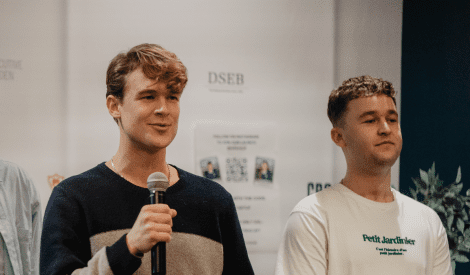
From founder to mentor
Returning to CSE as a mentor is more than giving back. For alumni founders Theresa Blank Schjønning and Steffen Meilsøe, it is a chance to revisit their own journey, find new clarity, and support the next generation of student founders. This is the first of two articles about mentoring in the CSE Startup Internship.
- Sofie
- 5 min read
Founders rarely get the chance to revisit where they started. Most days move fast. Yet when alumni return as mentors in the Startup Internship programme, something slows down. A moment opens for reflection – for the students, and for the mentors themselves.
For Theresa Blank Schjønning, co-founder of Studio Blanca, and Steffen Meilsøe, founder of FREEJOGGER, stepping back into CSE feels familiar. Each recognises the early-stage intensity in the students they meet.
“It’s cool to be back, sitting in a different situation,” Steffen says. “I remember working on a fledgling idea, hoping it would materialise into something meaningful, and getting motivated by a mentor who was further along.”
Theresa describes something similar, but through a more personal lens.
“Mentoring is a powerful mirror,” she reflects. “It forces me to view my own path from an outside perspective, revisiting the chapters I’ve lived through, how I felt, and how I grew.”
Where Steffen focuses on the early uncertainty of building something new, Theresa’s angle adds the element of looking back. Together, their reflections show that returning to CSE is as much an inner process as an external one.
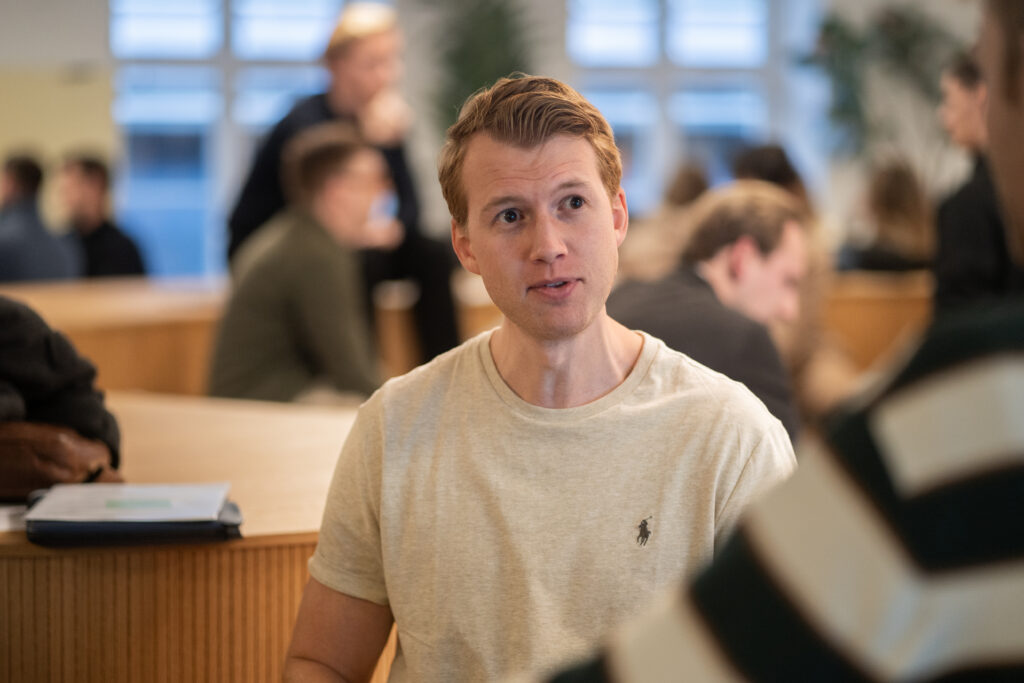
Mentoring at CSE gives founders a space to pause, reflect, and see their journey with new perspective – often gaining as much as they give. Photography: Agata Skrzypczyk
Mentoring as reflection
Both founders describe mentoring as a way of seeing their own journey with fresh eyes.
For Steffen, hearing students describe their challenges prompts him to test his own assumptions. “These mentoring sessions help me look at my own journey and question what assumptions I am not pushing against hard enough,” he explains. “Sometimes it is easier to see an untested assumption in someone else’s story than in your own.”
Theresa recognizes a similar shift but connects it to leadership. “Mentoring helps me step back and analyse the full entrepreneurial process. Not just outcomes, but the mindset needed at each stage,” she adds. “It clarifies when boldness is needed, when patience matters, and how different phases require different leadership energy.”
Together, they show reflection not as a pause, but as a constructive skill – one that supports founders at every stage.
A two-way exchange
Both mentors return because they want to support new founders. Yet the exchange gives something back to them, too.
Theresa hopes the students gain a grounded sense of what the founder’s path really feels like: the irregular pace, the behind-the-scenes reality, the need for grit. “Real insight into the founder’s journey: the highs, the lows, and what happens behind the scenes,” she emphasis. “In return, I walk away inspired by their fresh ambition. It gives me great energy that goes straight back into my journey.”
Steffen recognizes the same dynamic. He shares how a mentoring session once gave him a breakthrough on a problem he had been stuck on. “I don’t have a secret formula,” he clarifies. “But I have a few principles that have helped me and others. And I always come with the outset that I might pick up a new idea or angle that helps me in my own struggle.”
Their experiences capture the purpose of mentoring in the internship programme: meaningful conversations that exchange value quickly and move founders forward – sometimes through action, sometimes through adjustment, sometimes through a renewed sense of direction.
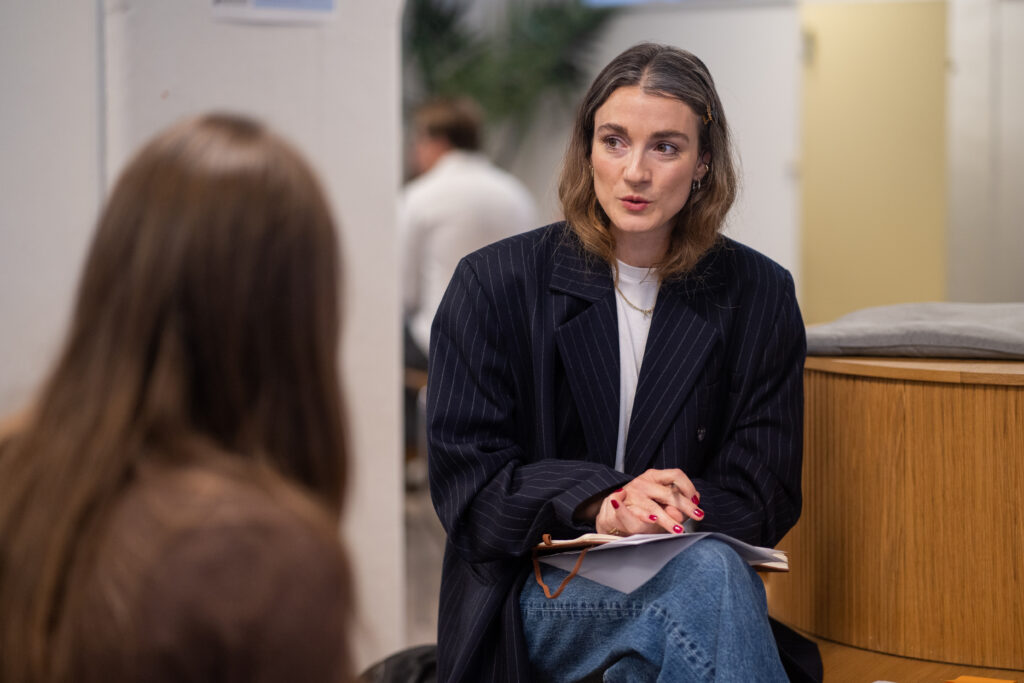
In the Startup Internship, mentoring becomes a two-way exchange where insights, assumptions, and next steps emerge through dialogue. Photography: Agata Skrzypczyk
Creating an honest space
Both mentors place high value on integrity. Students often arrive with uncertainty, early wins, and feeling stressed. The role of the mentor is not to give solutions but to create the space where real challenges can surface.
Steffen focuses on clarity and humility. “I make sure everyone knows I don’t have all the answers,” he stresses. “I can help challenge assumptions and prompt reflection, but their journey is their own. The most useful thing I can do is help them see what really matters.”
Theresa leads with openness. “I show up candidly about my own journey: the wins, the failures, the emotional rollercoaster,” she says. “That openness builds trust. When you’re honest about where you’ve struggled, I think it’s the best foundation for your mentees to be safe to do the same.”
His candour and her openness complement each other. Both approaches encourage students to speak truthfully about where they stand and where they want to go.
What they wish they had known
Looking back, the advice they once needed is still present in their work today.
Theresa speaks about the power of community. “I would have benefited from more role models and like-minded peers – people who get you, challenge you, and push you forward,” she reflects. That absence later shaped CAYA Collective, the community Theresa co-founded for women in the creative food world.
Steffen is direct: feedback must come early. “Postponing feedback is the number one problem founders have. The more we can help each other get past that, the better.”
One message centres on people. The other on practice. Both could change the early trajectory of a founder.
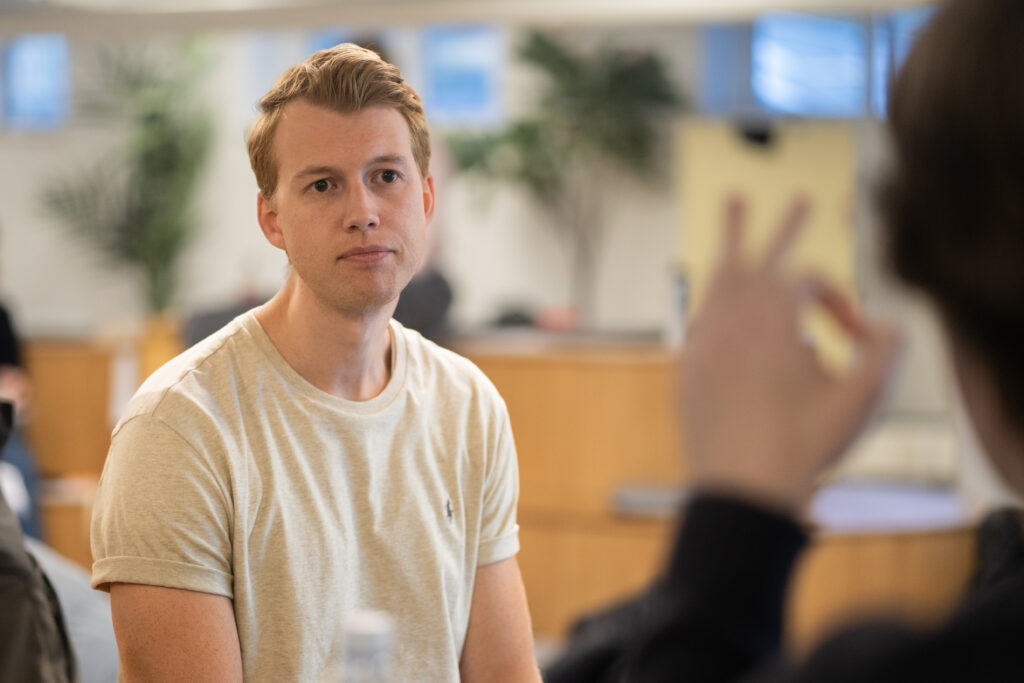
Honest conversations help founders grow on both sides. Mentors and students meet in a shared space of reflection, clarity, and experience. Photography: Agata Skrzypczyk
Full circle
What ties their stories together is the sense of return, as a natural step in their journey. Mentoring reconnects them with where they started, enhances their leadership, and gives clarity to their next steps.
It also keeps the CSE community moving. Founders grow, return, and support those beginning the same path. The students sitting in mentoring sessions today may one day come back as mentors themselves.
Learn more and get involved
The CSE Startup Internship with ECTS combines academic study with hands-on work in a startup environment. Participants develop both practical and analytical skills while working on real entrepreneurial challenges. The ECTS credit transfer is a collaboration between CBS and CSE, where CSE is your workplace and CBS provides academic and examination responsibilities.
→ Curious about the CSE Startup Internship and what it entails? Learn more here.
→ Interested in becoming a founder mentor for the next group of internship student founders? Reach out to Stephanie: sc.cse@cbs.dk