Mentoring that moves founders forward
Joining the CSE Startup Internship places student founders in a space where their company and their capability grow side by side. Mentoring becomes a key part of that process, offering conversations that bring clarity, direction, and confidence. This is the second of two articles about mentoring in the CSE Startup Internship.
- Sofie
- 5 min read
The early stages of a startup rarely seem linear. For many founders in the CSE Startup Internship, the beginning is marked by a mix of motivation, uncertainty, and the demand for progress while still figuring out what progress means.
Some arrive with an early MVP, others with a concept, and some are already juggling clients. Some face the tension between academic expectations and entrepreneurial momentum. But almost all enter with the same question: how do I move forward with more clarity?
Across conversations with three student founders – Anabel Burchill, Jules Strange and Julius Haberstroh – one thing became clear: Mentoring does not give them a roadmap. Instead, it creates the conversations that help them see what matters now.
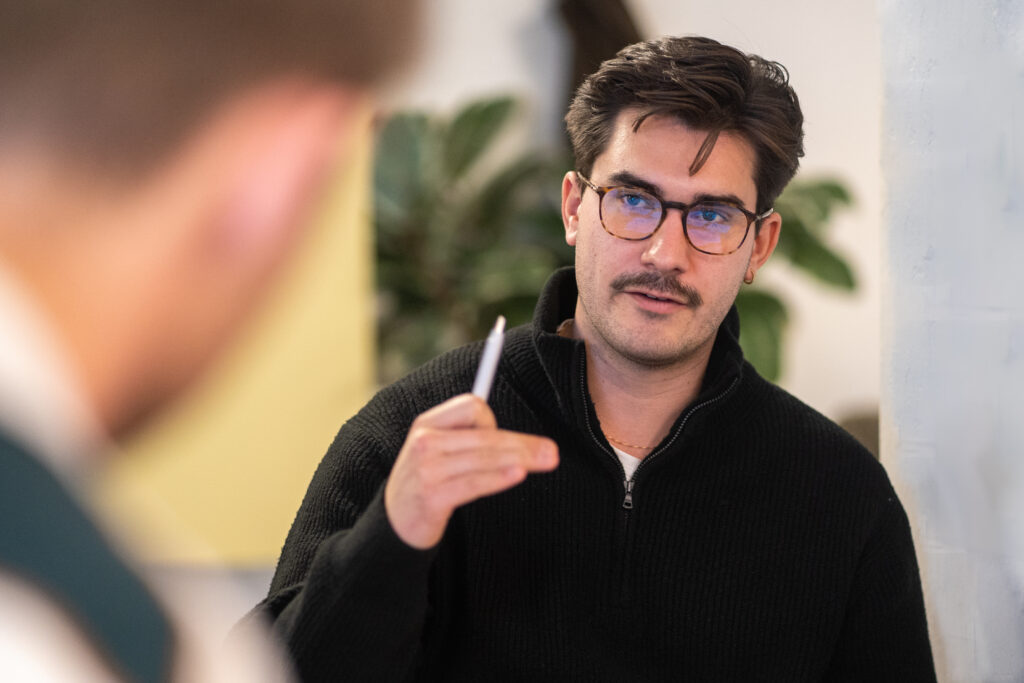
Julius’s experience shows how learning alongside other founders makes early challenges easier to navigate and far less isolated. Photography: Agata Skrzypczyk
Cutting through noise
For Julius, building an emotional-regulation tool for people with ADHD and autism, the mentoring session became a moment of refocusing. He arrived preoccupied with marketing and go-to-market plans. His mentor paused him and asked: “Have you validated enough?”
“It made me step back,” Julius said. “I needed to refocus on what is important right now.”
Jules experienced something similar. As the only team member with business experience in her arts-based cooperative, most structural work had landed on her desk. Her mentor’s suggestion was simple: write down the steps she takes so her co-founders can take on more responsibility.
Mentoring, in these moments, becomes a filter. It removes tasks that are urgent but not important, and anchors founders in the work that is.
Asking for help
For Anabel, mentoring surfaced a more personal learning: the discomfort of asking for help. “I help others easily, but hesitate to ask for help myself,” she said. Her mentor reminded her that people are usually willing to help – a message she knew but needed to hear in a founder-to-founder conversation.
Julius added another angle: when someone gives their time, active listening becomes essential. “Engaging fully in the conversation increases the value of the exchange – for both sides.”
Across the interviews, mentoring appears not only as guidance, but as a space where founders practise asking, listening, clarifying, and engaging – capabilities that shape how they work far beyond the sessions themselves.
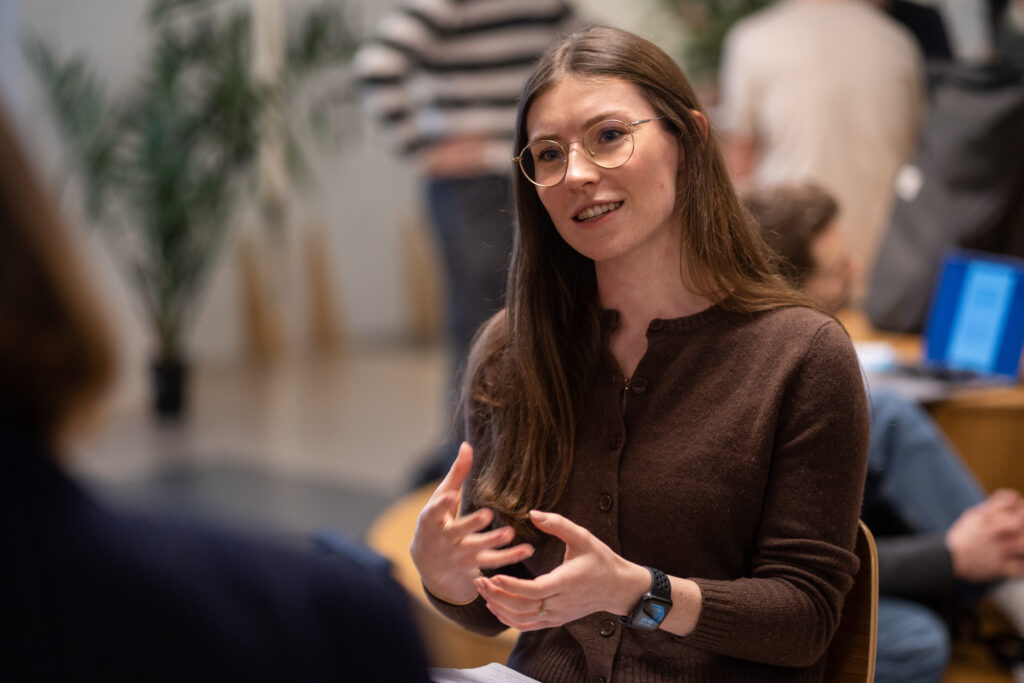
Mentoring helped Annabel gain clarity, practise asking for help, and take the next step in her startup with more confidence. Photography: Agata Skrzypczyk
Seeing progress
Reflection is built into the internship, and each founders used it differently.
For Anabel, the four-week cycles became a tool for recognising progress. “It highlighted small things we had achieved. Otherwise, I would not have noticed them,” she said. It also helped her separate her own learning from the team’s, which gave structure to an otherwise dynamic period.
Jules found clarity in explaining her business to people entirely outside her industry. “It forced me to create a simpler version of what we do,” she said. The process of articulating the business again and again became a form of thinking.
For Julius, reflection was a necessary pause. “We are usually so locked in on doing. The sessions forced me to see the big picture again.”
Reflection became less about looking back and more about seeing forward with greater intention.
Not alone in the journey
The emotional intensity of early-stage work is something all three founders recognised.
“Some mornings everything seems clear, and by the afternoon the very same things feels uncertain again,” Julius admitted. Conversations with other student founders showed him this is part of building something new.
Anabel experienced similar relief in hearing others share stress, pressure, and doubt. It also taught her something about feedback: some people want deep input, others do not. “It helped me prioritise where to invest my energy,” she added.
Mentoring plays a role here, too. It brings founders into a space where uncertainty is not a problem to hide, but a shared condition that becomes easier to navigate together.
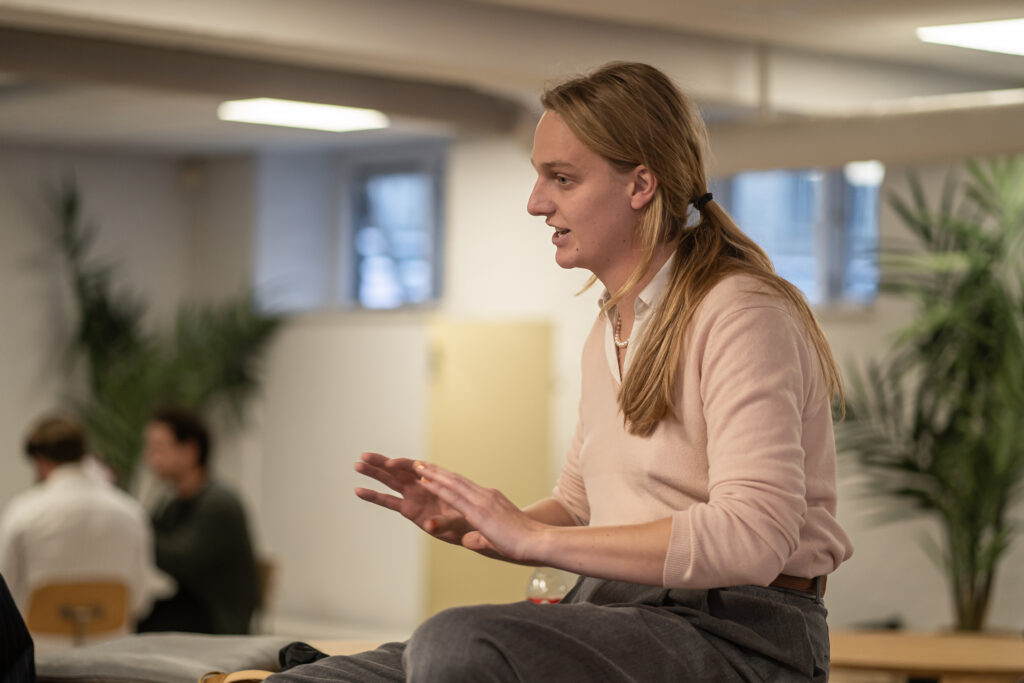
For Jules, the internship shows how honest conversation and reflection bring clarity and help founders navigate early uncertainty. Photography: Agata Skrzypczyk
Advice for future founders
While their stories differ, the advice they give to the next internship cohort is clear and grounded.
Anabel: Stop comparing your early stage to someone else’s polished brand. Most visible founders have full teams behind them. It is okay not to have a perfect product or perfect social media. Sometimes quantity matters more than perfection. She is also learning to detach herself from the product and not take feedback as a judgment of her personally.
Jules: Keep questioning yourself and find people who question you too. Test assumptions and talk to others about your thinking. Her guiding mindset: say “when”, not “if”. Confidence matters, but so does learning from what did not work and moving forward with persistent optimism.
Julius: Do not let your background limit you. With today’s tools, you can build more than you expect without being highly technical. Start earlier, experiment, and learn through doing. He also suggests using the internship to build continuity with your academic work, for example by linking it to your thesis.
The loop continues
The CSE Startup Internship creates a space where founders learn through conversations – with mentors, peers, and themselves. The mentoring sessions surfaced insights, clarified decisions, and normalised the emotional work of building something new.
Founders learn, grow, and one day may return to support those who follow. At CSE, learning continues, shared across generations of founders.
The founders and their startups
Anabel is co-founder of álainn, a Copenhagen-based cake-kit startup she builds together with her two co-founders. Their aim is to make home baking for special occasions easier and less stressful, especially for young mothers.. As a student of organisational innovation and entrepreneurship at CBS, Annabel works on developing the venture through the CSE Startup Internship.
Jules is co-founder of Bølgebrud F.M.B.A., a cooperative working to develop a more sustainable business model for the Danish art industry. A poet and musician with experience in the cultural field, she brings both artistic insight and structure to the project. With her background in business administration and psychology at CBS, she leads much of the business development as the venture grows within the CSE Startup Internship.
Julius co-founded Firebreak, a startup focused on helping adults with ADHD turn emotional overwhelm into insight through science-based digital tools. Rooted in both research and personal experience, the team works to address the often overlooked issue of rejection sensitivity. Julius studies innovation and business development at CBS and develops the venture as part of the CSE Startup Internship.
CSE Startup Internship with ECTS
The CSE Startup Internship enables students to apply their academic knowledge gained in courses to a real-life setting. It allows them to activate theoretical insights from areas such as innovation, leadership, entrepreneurship, strategy, and finance in the context of building their own venture. Students work on real entrepreneurial challenges while earning ECTS, supported jointly by CBS and CSE. Mentoring, reflection, and founder-to-founder learning are central elements of the programme.
→ Learn more here.